December 8, 2025

Hamnet: Sometimes a movie can provide a fresh new perspective on a familiar story. In this instance it is a new surrounding story about William Shakespeare and his life along with the creation of the masterpiece tragic play Hamlet. In truth I will admit that from high school many years ago that I didn’t like this play. For me it was infuriating because of Hamlet’s inability to act; he suffered from analysis paralysis in exacting revenge for his slain father. That, of course, was the point and the tragic flaw for the young Prince.

Along comes director Chloe Zhao and the interpretation of the bestselling book from Maggie O’Farrell (unread by me). It starts with a young Shakespeare (played excellently by Paul Mescal) meeting up with a local girl who is known for being strange and “of the forest”. It seems her deceased Mom was known for being the same. The girl is played by Jesse Buckley. The two begin a relationship that moves along quickly. They are very attached and children arrive soon after. A daughter, named Suzanne and then twins (Hamnet and Judith). These are the actual real-life offspring of Shakespeare himself. I won’t delve further into the plot developments to avoid spoiling important aspects of what occurs. The family is well connected it seems, with loving parents and a caring rural community. The story continues and culminates in the final act with wife attending in London for the first performance of her husband’s new play.

This is a remarkable film with tremendous performances. The people involved are real. They act authentically and show real emotion when life happens to them. They struggle and are creatures of their times. Shakespeare has a strained relationship with his father, who wishes his son would take up his the family business rather than engage in this theatre nonsense. His mother played by Emily Watson struggles with the bohemian attitudes of her daughter-in-law. His wife is a rebel, which was an endearing feature about her when they courted. There is such emotion with these characters as they interact, and we see much like the recently reviewed Sentimental Value that a father who spends much time away from the family can express to those he clearly loves his emotions and how the events have impacted him through his work. Shakespeare as father is reaching out and reconnecting to show that he cares and he sees those he loves, despite protests to the contrary. Jesse Buckley in my view with this performance has won the Oscar. It is excellent. Such emotion. Such devotion and dedication. She shows a woman who struggles in her times while balancing motherhood and pressures of her family (including in-laws) and station. She suffers herself with the relationship with her mother. The scenes in the final act at the theatrical performance are just excellent as we see how the words of the play can reveal so much more if viewed from a different lens. In short, go see this. I have lamented that Hollywood is not creating enough human stories (unlike more independent and generally European filmmakers) but we have Steven Spielberg (who is as Hollywood as it gets) executive producing this masterpiece. Go see it. Immerse yourself in an emotional story that just may have you seeking out Hamlet one more time.

Jurassic Park Rebirth: My goodness this was bad. It was unnecessary. I had such low expectations too. This is the seventh movie in the franchise. It is remarkable to think that this is the case. For me only the original Spielberg movie is memorable. But that aside there was a discussion in the movie between Scarlett Johansson, playing a mercenary project manager, and a paleontologist (who studied under Alan Grant from the original film) who talks about dinosaur bones and packing up a museum display. It seems according to him that “people don’t care about dinosaurs any more” and “exhibits that once would have had huge crowds are now having few visitors”.

For me Johannson is out of character as a cut-throat mercenary with dubious morals about international laws who simply seems to be in the movie to fill out a tank top. Yet surprisingly she also seems to grow a conscience very quickly after initially agreeing to an enormous sum of money for completing the task at hand.

The task is to retrieve real live blood from three types of dinosaurs (air, land and sea) in order to study their hearts to produced an expensive “cure” for heart disease. The bad guy is “big pharma”, personified by actor Rupert Friend who is as slimy as you would expect. This team must go into forbidden air space where the dinosaurs have limited environmental conditions to sustain them, which makes them filled with the dinosaurs and dangerous. The team adds in (Mahershala Ali) to the team, and then by happenstance a family (father, two daughters and a young boyfriend) who have their sailboat have an encounter with the very large sea-baring dinosaur. Ironically of course it is the one that Johansson and team seek out.
The challenge through all of this is that it has been done before. Sure some of these “engineered” dinosaurs which were made at a facility on another island are bigger and more strange but they aren’t new, nor exciting. It is much the same again and again. Even the star power involved can’t save this effort. I saw this on a plane and I am glad that I didn’t spend any real money on it. This is a hard pass for me.

Black Mirror: I am steadily going through each of these episodes. Some I have liked more than others. Generally I like them all as a collection of individual stories. Each stands on their own with the Star Trek theme USS Callister having a follow up sequel which was itself excellent.
The last couple I have watched were the space themed Beyond the Sea in Season 6, and within Season 3 both Playtime and Nosedive.

Beyond the Sea stars Josh Hartnett, Aaron Paul (who I haven’t seen much since Breaking Bad ended) and Kate Mara. The two men are astronauts heading out for a long journey. Technology has been developed, almost like The Matrix or Avatar where by sitting in a special chair the man’s consciousness can be transported back to earth. On earth there is a synthetic version of him to interact with his wife, kids and environment. It keeps the astronauts grounded and helps the families to cope for the time that has a husband away in space.

Something happens to one of the synthetics on earth and his family which was unforeseen. The other astronaut and his wife decide to help him out and share some time back on earth. Without giving a lot away, this episode goes places that was unexpected for me. It is a dark place but very satisfying. The acting is good in this episode and generally in the series as it attracts some big star power. I liked this and it certainly makes one think about technology and benefits as well as unintended negative consequences.

Nosedive stars Bryce Dallas Howard and Alice Eve. They live in a world where, much like today, every interaction one has throughout a day is rated on a 1-5 scale. See the picture below, does this look familiar? The added feature is that the scores are compiled and the person then becomes the sum of their ratings. The higher the number, the perception is that the person is better. At least more desirable. But it also becomes the basis for discrimination. A person whose scores are trending down is shunned by those around them.

Howard lives with her brother but wants to move out into a place of her own in a desirable neighbourhood. She is sitting at 4.2 and pleasant with those around her. In order to get into this new condo and obtain favourable financing she needs a Person Score of 4.5 or higher. It is a challenge. A potential solution presents itself from old friend played by Alice Eve. She is getting married and the party is all exclusive 4.6 and up. If Howard can deliver a killer speech as Maid of Honour from higher pointed people, then her life would be (in her mind) better. Things happen from there that conspire against her. It was good. It makes me think from time to time now about whether I want to rate a particular transaction.

The next episode was Playtime where a young man with a strained relationship with his Mom heads off suddenly to travel the world. After some globe trotting near the end of his trip he is in London. He meets a young woman who he finds out works for a gaming company. They sleep together and the next day he is out looking for cash for his trip home but his bank card has been hacked. He needs money for his last few days. He meets back up with the young woman and she recommends he test out some next software from this well known company. He decides to do it. The game being tested is virtual reality which includes a temporary technology attachment to the back of your neck. The device engages with your memories as part of the simulation. Things happen with interesting consequences for the affable young man. Although not the strongest episode it was still worth checking out.

December 1, 2025

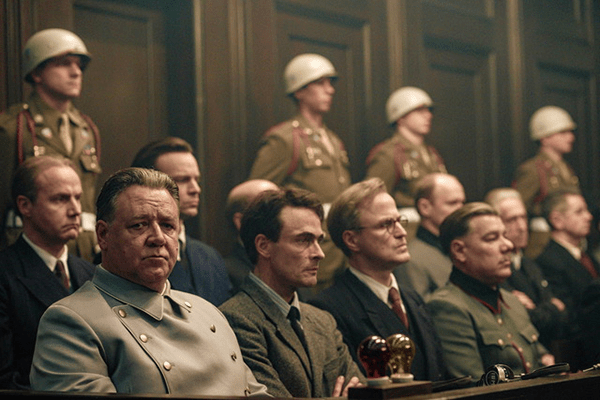
Nuremberg: I had recently rewatched the excellent 1961 film Judgment at Nuremberg in anticipation of going to see the latest movie Nuremberg being released with the excellent cast of Russell Crowe, Michael Shannon, Leo Woodall and Remi Malek. The prior all-star cast movie addressed the secondary trials that were undertaken after WWII in bringing judges and other notable people to justice for their participation in the atrocities of the war. This movie deals with the trial of the Nazi High Command still living just after the war was over in May 1945. The trial was of second-in-command Hermann Goering, Rudolf Hess, and others. In total there were 23 defendants. As part of the team overlooking the inmates, there was brought in a psychiatrist, Douglas Kelly (played by Remi Malek) who was to ensure the mental stability of those to be tried.

The US had pressed for a formal trial to be undertaken by the victorious Allied forces for the actions of the Nazi government, which the Allies had just realized had been unlike anything ever done in human history. The death camps with the extermination of 6 millions Jews, plus many others was outside any action previously done. The world wished to ensure that an independent body founded in international human rights laws could bring to justice people who were responsible for such unspeakable acts.

Within this film there is footage from 1945 of the conditions at these camps as found by the Allies when they were being liberated. This footage is disturbing, but necessary for everyone to see. To his credit General Eisenhower made a point that film, pictures and eyewitness accounts should be taken of the concentration camps as they were and ordered that the US Army Signal Corps, along with other politicians and prominent people, see the camps for themselves and report on them. He foresaw that in the future there could be those who would deny that any of this had ever taken place.

For me the story with Malek and his efforts muddies the story unnecessarlily, and he takes actions that I find quite surprising (especially when interacting with Goering’s wife and child). The focus should not be him, but rather the prosecution and defense of the Nazi commnd. Sadly, unlike Judgment at Nuremberg, we do not see the defense lawyers and their arguments. Those are addressed early by the wife of Robert Jackson, the lead US prosecutor. For me, another couple aspects that stood out include that unlike Goering, Hess did not receive a sentence of death by hanging. Rather he received a life sentence, and he lived until he was 93 years old. Also, the underlying view that the world was changing, and the power dynamics had shifted from Germany to the Soviet Union and that the Western Allies realized that Germany would be an important future allie against the Soviets one day, which tempered the retribution potentially of the Nazis. I will say that it was important to bring home the point that the Nazis were human, and they didn’t have any particular gene or trait that made them monsters versus others. Rather it is pointed out that the victors get to judge the vanquished, and the Americans in bombing Japan with two nuclear weapons on women and children were unable to take a high ground and judge what the Nazis had done. Moreover, in a recent visit to Dachau concentration camp in September near Munich, the actions and propaganda of the Nazi party are eerily similar than what we are seeing from the majority authoritarian Administration in the US. Yes, it’s not Hitler, but most of the marks of a fascist regime in setting up such a system are well under way.

After the movie was over, I wanted to see whether the examination of Hermann Goering actually took place, and you can see from below that it did. For the movie, rather than showing the interplay with lawyers, it becomes the psychiatrist against the narcicisst (Goering) who believed that he would be walking free from the proceedings.

This is not an awards movie. But I do think that this is a good reminder in these times that we set up International Laws and Tribunals to review the actions of States that act like they are above review and reproach. The Rule of Law internationally is as important as it has ever been, and yet no one seems to be stepped up and looking to have it review current worldwide conflicts. This is a movie that people should see, if for nothing than a reminder of how shocking The Final Solution really was.

Sentimental Value: I had seen some positive buzz about this movie, released just a short time ago in limited theatres. It stars Stellan Skarsgard (who seems to be getting better and better at his craft as he ages despite suffering a stroke in 2022 which impacts his memory and ability to remember lines), Renate Reinsve (from The Worst Person in the World) and Elle Fanning. The movie is split between English and Norwegian with subtitles. I welcome quality acting and storytelling like this, which reflects on real, authentic human relationships, and in this instance family relationships. It covers themes like father and daughters, family trauma, communication and very real dynamics which are universal. For me, being an older person, it impacts me (I think) more deeply as there is more history in my wake, with marriages, children and notably a daughter.

The very beginning of this story speaks to a quaint, distinctive old house in Oslo. This has been a home for generations of the Borg family. We learn about some of those previous owners. Presently in the house, Skarsgard plays a well known director, Gustav Borg, who is attending the wake of his ex-wife, and his two estranged surviving daughters (Nora the elder, played by Reinsve, and Agnes the younger). Dad wishes to reconnect with his eldest daughter, who is an actress by bringing to her a new project which he says was “written for her” and would be perfect for her career. She flatly refuses to work with him, and continues performing on the stage, where she can struggle with her stage fright and emotions at times that we see. Younger daughter Agnes has a husband, and a 9yo boy. With Agnes, who had acted in Gustav’s last film project from 15 years ago as a child, Dad wants to have some more family participation. His new screenplay is very family focused, yet not completely autobiographical. The movie continues.

What I liked best about this film, and I really liked it, is that it shows the family details with conversations that are stilted and superficial and never addressing the underlying issues. There are smiles and knowing glances between those watching an interaction but there is tension. It doesn’t seem to get better. The hurt continues. Gustav is a director focused on his own needs and wants and paying little attention those around him. He is charming to strangers and persists strongly with his girls to pressure them to do what he wants. The women daughters are pleasers, who suffer while generally being compliant. They keep many thoughts to themselves, even when then strongly object to an approach. Elle Fanning plays an American Hollywood star who attends a viewing of the previous Gustav film at a Festival and approaches him about doing something “more substantial”. Fanning plays a surrogate to daughter Nora for the movie project, which Gustav is also planning on shooting in the house where the girls and the family had lived. This movie isn’t for everybody, and I think younger viewers could struggle with the pace. However they might gain some insight into how they perceive their own parent. This remains a really good film and I am glad that I saw it. It sticks with me as I think through the ways that it reflects back on my own life. Good cinema does this. It can mirror circumstances that you may have experienced before and allow you to see them for different angles. There isn’t really a “truth” per se in family situations, but different perspectives. Ultimately your parents are still your parents, and as the saying goes “blood is thicker than water”. Family carries on and the hope can be that it may cause pain, but still also provide love and support which can carry one through tougher challenges.

Black Mirror: I am steadily working my way through this series. I was least enthused about Fifteen Million Merits, which addressed a Britain’s Got Talent, X Factor like game show where participants are vying for a chance to be offered a dream job. The story addresses people who ride bikes to earn merits, and then an enormous amount of merits are needed to go on the show. The twist was surprising by the payoff didn’t really work.

However, I was very excited about two further episodes entitled Be Right Back and San Junipero which were both very good. Be Right Back stars Hayley Atwell and Domnhall Gleeson and addresses grief. Once again technology is used to provide a backdrop for a moral dilemma. But the technology they speak about isn’t too far distant in the future (at least initially in this episode). I thoroughly enjoyed this from the performances to the story and the dilemma involved.

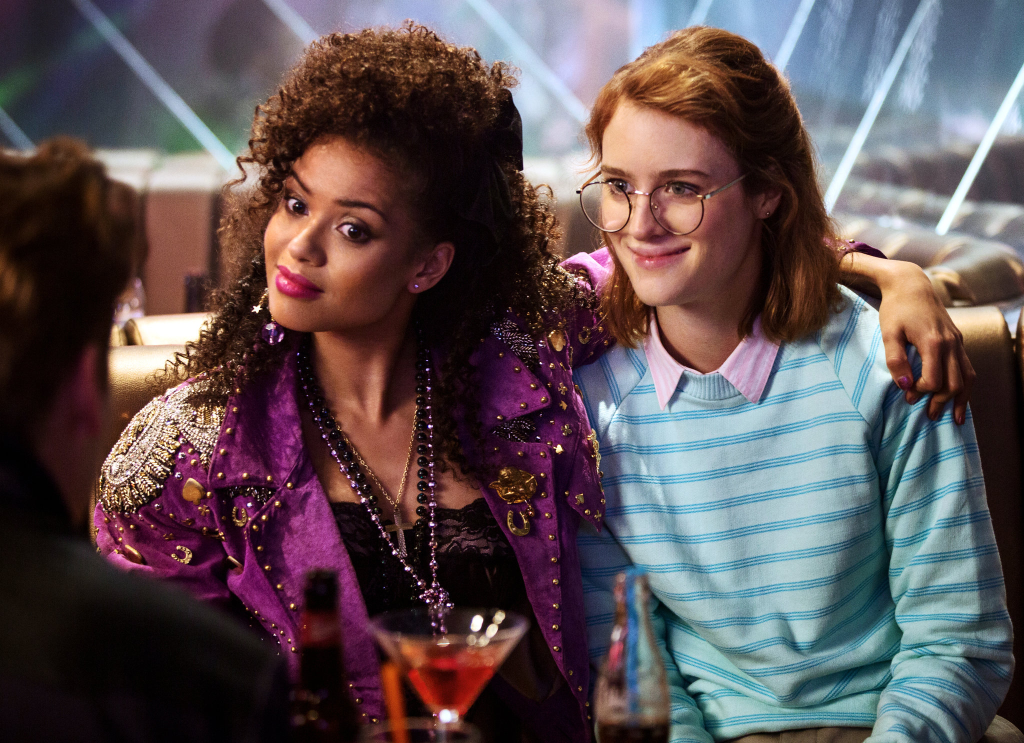
I also enjoyed San Junipero starring Canadian Mackenzie Davis and Gugu Mbatha-Raw. This is another relationship story with an awkward woman (Davis) meeting up with a more wild woman. Together they build a bond in a unique place, as Davis learns to come out of her shell and be her authentic self. Well worth seeing.

I actually rewatched Mackenzie Davis in Terminator Dark Fate and once again was pleased with the story in this franchise. It takes an off ramp on the original John Connor story, and becomes more about the strong women involved in this time including of course Sarah Connor, being played once again by Linda Hamilton. I still stand by my review of this movie from back from November 4, 2019.

November 24th, 2025

Blue Moon: Ethan Hawke stars in this movie directed by Richard Linklater. He plays Lorenz Hart in 1943 who was a very talented musical lyricist, who worked alongside the more famous Richard Rodgers (of Rodgers and Hammerstein fame). Hart worked with Rodgers for over 20 years, having met him in 1919 until Hart’s death in 1943.

The film opens with the death of Hart, drunk on the streets of New York and dying of exposure. He was an alcoholic and suffered from depression. Going back in time, the movie then goes to opening night of Oklahoma! which Rodgers worked with Oscar Hammerstein. Hart goes to Sardi’s bar/restaurant, a New York institution, and chats up the bartender, a piano player and another patron about this lovely young woman that he has met. Later on, Rodgers arrives, played by the excellent Andrew Scott, who makes time for Hart, but who can be seen to be increasingly uncomfortable in engaging further with him. Rodgers found Hart to be too unreliable with his drinking and attendance in working sessions, but still recognized the brilliance of the man with the words and ideas in songs. Songs which they worked on include “Blue Moon”, “The Lady Is a Tramp”, and “My Funny Valentine” among many.

The film is really almost a one-man show for Hawke. In an interview he described that his good friend and director Linklater had challenged him with this role, and said that he didn’t want to see any of the typical Hawke mannerisms. If he saw any, he would stop and do it again. Hart was a short balding man at around 5 feet tall. Hawke is 5’10” and so they had to do some camera tricks to make him this short. It was noticed but done well. Hawke captures an annoying, talkative, know-it-all person who was just sleighted by his collaborator in creating a memorable work without him. It is a divorce in a way. To Rodgers’ face, Hart gushes about Oklahoma, but behind his back and with others he condemns the piece as not reflecting the midwest or current values of the day (wartime USA). Hart rambles on about the young woman, who he talks about his love for her (despite those in New York scene thinking that he was actually gay) but one wonders whether she feels as he does in return. She arrives and we see how it plays out. Despite being an alcoholic, we see that Hart didn’t have a great deal of fortitude to keep the drink from running his life. It seems the part of him that made him an excellent lyricist also made him an insufferable human being. Having seen this past summer the most excellent play Good Night Oscar about an appearance by another addicted and talented pianist Oscar Levant, I could see a number of similarities between the two. In the end I think that Hawke was excellent here and it should garner a Best Actor nomination. The movie was only 1:40 long, and yet at times as an audience I felt like Rodgers in that we were spending more time than I wanted with this odd, talented, strange man. I am glad that I saw it.

Frankenstein: This is the new Guillermo Del Toro interpretation film recently released both in theatres and on Netflix. It was at TIFF this past September. It stars Oscar Isaac as the scientist Victor Frankenstein. I will preface my comments to state that I do not profess to be a Frankenstein expert in any way. I have never read the Mary Shelley book, but back in 1994 I did see the version of her story on film with Robert De Niro playing the monster and Kenneth Branaugh as Victor. I truly do not remember it. To be fair, this is 31 years ago! So this review is not going to be a comparison with that film, nor a detailed review of how this film diverges from the original material. This movie will stand on its own.

Del Toro has a certain style of film, and he tells certain stories. There is a Making Of documentary on Netflix as well which is a good overview of the filming process and his creative mind. Del Toro speaks about himself and stories that shaped him, and Frankenstein as well as Pinnochio were two stories that impacted him the most. Not surprisingly these are his last two movies, and both have been on Netflix. But both stories explore the relationship with fathers and sons, along with creators and their creations. Gipetto wanted a son and created one. Victor wanted to extend life or cheat death and created his monster. Del Toro wants to make films about people “who are full of villainy”. That is an interesting lens.

This is filmed beautifully, and once again in Toronto for much of it, in the studios on Kipling and they made and filmed the ship on the Docks area near the waterfront. The sets are detailed and the costuming is excellent. It is a period piece with it separated into three Acts, with the Victor story, the Monster story and then the final Act with them back together. Early on we see Victor’s young life with an overbearing father Leopold, played by Charles Dance from Game of Thrones fame, who berates the young Victor and treats his mother horribly. Victor becomes obsessed with making a mark on the world and science. The acting is good with Isaac, but add in Dance, Christoph Walz as the father of the fiance (played by Mia Goth) to Victor’s brother named William. Jacob Elordi plays the monster, and he has initially a very physical role and then he obtains more vocabulary to speak on his own behalf. The monster has abilities that simply belie explanation from a biological perspective. So on that front, this takes away from overall believability. I was also surprised that Victor in interacting with his creation, decides to treat the monster horribly, berating him for his lack of language skills. He shows no kindness, no joy in completing his lifetime ambition, and this perceived requirement for perfection before showing the world the achievement. So then the monster then becomes more monsterous, and begs the question about nature versus nurture.

Overall this was competent, and shows the love of the material by Del Toro. The movie byline is that “Only Monsters Play God”. There is a desire to create sympathy for the monster with mixed results. The final message reflects onto those who live in miserable cirsumstances and have no real way to escape from it. So where does it fall in comparing with other more recent horror/thriller movies? Is it better than Nosferatu which I would say that it is the closest comparison? I think that they are both decent efforts. This is not a Best Picture nomination for me. I don’t see acting honours in here either. As a movie available on Netflix, it is worthy of an evening to watch a talented director show one of his favourite stories.

Black Mirror: It was recommended to me that I check out some episodes of this series on Netflix. It was a British series at first from back in 2011, but then Netflix got involved in five further seasons from 2016 until 2025. It was recommended to me that there were a few episodes to start me out and see if I liked it. The first one was in this latest season (series 7) and the episode entitled Eulogy with Paul Giamatti. Think of this series like a modern day Twilight Zone with a more technological bent. There is a theme from the few episodes that I have seen which utilizes a technology that will interact directly with our minds and memories.

In Eulogy, Giammati plays Phillip who is a bitter, angry older man who lives on his own. He receives a random phone call with a name that was initially not familiar, and then he recognizes as a former girlfriend. It turns out that she has passed away. He is asked by the mysterious voice whether he has any memories or something that he would like to add to the memorial/wake proceedings. It can be pictures or memories, and to assist Phillip is offered to put on a small metal disk on his temple to explore the memories. Music can help. Pictures help as he can be brought back into those pictures (literally) and talk about that moment in time. What begins as a cursory review for Phillip then digs deeper and we realize that he knows this person Carol more than casually. It was a serious relationship. We come to realize that this was likely the most significant relationship in Phillip’s life and that there are lessons still to be learned. It is so very well done, and I would recommend this to anyone, especially older people, who have a past which covers relationships and lost loves and crossroads where paths were taken and others were not. We can see that the same set of circumstances viewed with both parties in mind, and their attitudes can shape things very differently.

I was then told that if I liked that, which I very much did, that I should watch an early episode in season 1, The Entire History of You and also a dating episode from Season 4 called Hang the DJ. Both were very thought provoking, and shows in a critical aspect of our lives (our relationships) how technology can play a part, in both a positive way, but also negatively. Imagine upon first meeting someone that you could press a button on a machine, and it would tell you the length of that relationship in hours, days, or years. Intriguing. Both are worthy of your time.

Then I was told, if I liked the original Star Trek with William Shatner to check out from Season 4, episode 1 USS Callister with Jesse Plemons and Cristin Milioti, from Penguin fame. Then in Season 7, there is a follow up episode (Season 7, episode 6) entitled USS Callister: Into Infinity where I will say that Cristin Milioti really shines. Together this could be a feature film. There is star power here in the acting but it is also a compelling story.

The “real world” has a new immersive video game, using the metal disk technology on the temple, where game players can enter a Star Trek-like world. The players enter this RPG (role playing game) and create an online persona. This digital version of themselves moves around that world and interacts with others. If you are a gamer, you know very much what I am talking about. These episodes explore what happens when these lines are blurred, and where a nefarious character with questionable scruples decides to manipulate others without their consent. I will leave it at that, because the result is a thrilling and fascinating exploration into the issues that are raised. I am very pleased that I was introduced to this series, and I will continue to review more episodes. I have been told that it can be hit or miss, but mostly quality programming. Check it out.